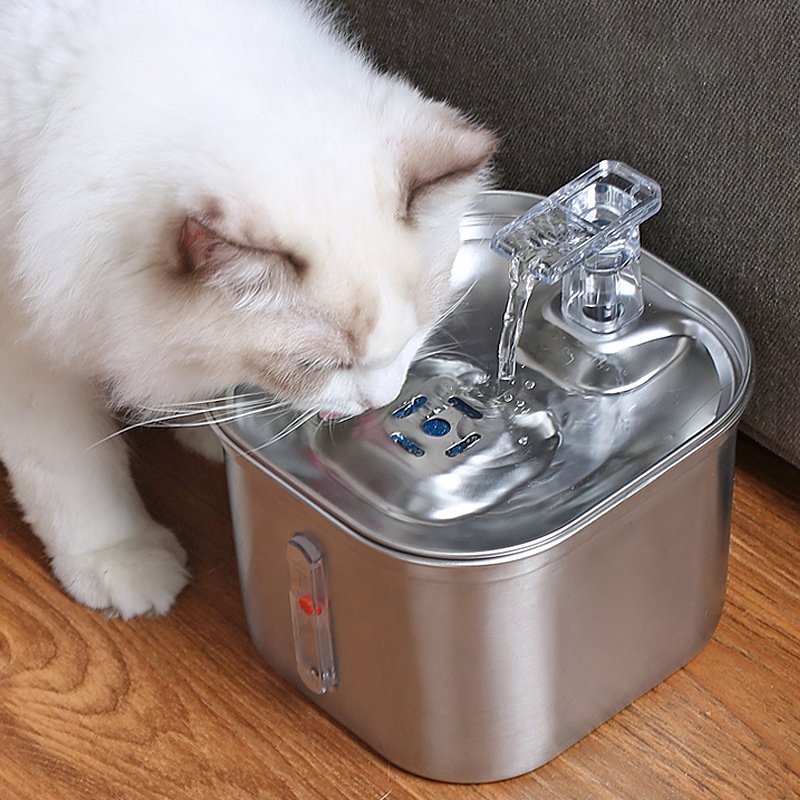
Some cats walk past a full water bowl all day, then drink from a dripping tap the second you turn it on. Some dogs gulp down half a bowl after a walk and then ignore it for hours. A pet water fountain is built for exactly that behaviour: it keeps water moving, so it looks — and to many pets, tastes — fresher than still water sitting in a bowl.
We looked at how fountains actually work, what owners like about them, and where they can be more trouble than a plain bowl. This is a general guide, not a test of one single model, so check the listing of the fountain you are considering for its exact capacity, material and filter type.
What it is and how it works
A pet water fountain is a small electric pump in a reservoir. The pump pushes water up through a spout or over a ramp, and the water flows back down into the bowl. Most models have a replaceable filter — usually charcoal, sometimes with a foam pre-filter — that catches hair, dust and bits of food before the water cycles through again.
Most fountains plug into a wall outlet with a low-voltage adapter and a chew-resistant cord. A few run on batteries or USB, but plug-in models are the common ones. Capacity is the number that matters most in daily use: a small fountain suits one cat, while a multi-pet household or a large dog needs a bigger reservoir so it does not run dry between refills.
Materials vary, and they matter more than the shape. Stainless steel and ceramic fountains are generally easier to keep clean and less likely to hold odours than plastic ones. Plastic fountains can work well too, but they need more regular scrubbing, and some cats develop chin irritation from plastic bowls and dishes — if your cat has had that problem, choose steel or ceramic.
What we liked
It encourages drinking. Moving water attracts cats in particular. Owners often report that a cat who ignored a bowl will drink from a fountain regularly. That matters most for cats, who are famously reluctant drinkers, and for any pet that needs to stay hydrated in dry, heated indoor air in winter.
The water stays fresher between refills. The filter catches visible debris, and the flow keeps the surface from sitting still. It does not replace cleaning — nothing does — but a fountain usually looks and smells cleaner on day two than a still bowl does.
It is quiet when it is full. A well-designed fountain makes a soft trickle, not a loud buzz. Many owners keep one in a bedroom or living room without noticing it. The noise usually appears when the water level drops, which is also a useful reminder to top it up.
It suits multi-pet homes. One larger fountain can replace two or three bowls, and cats and dogs can drink from different heights and angles around the same unit.
What to watch out for
Cleaning is not optional. A fountain has more parts than a bowl: pump, filter housing, spout and corners where slime can build up. Expect to wash it at least once a week, and to rinse the pump more often. If you will not clean it that regularly, a plain stainless steel bowl is the better choice.
Filters are a running cost. Most filters need replacing every few weeks, depending on the model and how many pets use it. Check the filter price and how easy replacements are to buy before you choose a model — a cheap fountain with hard-to-find filters is not cheap for long.
It needs a power outlet. The cord has to reach a socket safely, away from where a puppy or kitten can chew it, and away from splashes. Battery models avoid the cord but need charging or new batteries, and they usually have a smaller capacity.
It can be too loud, or too still. If the water level is low, the pump can rattle. If the flow setting is too strong, a nervous cat may avoid it. Look for a model with an adjustable flow, and start it on the lowest setting for a shy cat.
Not every pet will use it. Some cats prefer a wide, still bowl, and some dogs splash the water everywhere. Give a new fountain a week before deciding — put it next to the old bowl at first, and only remove the bowl once your pet is drinking from the fountain confidently.
Who it is for
- Cat owners whose cat ignores a still water bowl.
- Multi-cat or cat-and-dog households that want one shared water station.
- Owners of senior pets or pets that need encouragement to drink, especially in winter when indoor air is dry.
- Anyone who is happy to wash a fountain weekly and replace filters.
Who should skip it
- Owners who want a zero-maintenance option — a stainless steel bowl, washed daily, is simpler and cheaper.
- Homes with no safe outlet near the feeding area, or with a puppy that chews every cord in reach.
- Very small flats where pump noise at night would be a problem.
Verdict
A pet water fountain is not a gadget for its own sake. For the right pet — especially a cat that ignores still water — it solves a real, everyday problem, and the current best-seller lists suggest a lot of owners are reaching the same conclusion this autumn. The catch is maintenance: it only works if you clean it and change the filter. If you will do that, it is one of the more useful upgrades in the pet aisle. If you will not, stick with a good steel bowl.
Check the current price on Amazon — and check the capacity, material and filter type on the listing before you buy, because those three details decide whether a fountain fits your home.
As an Amazon Associate, Paw Picks earns from qualifying purchases.