Research review
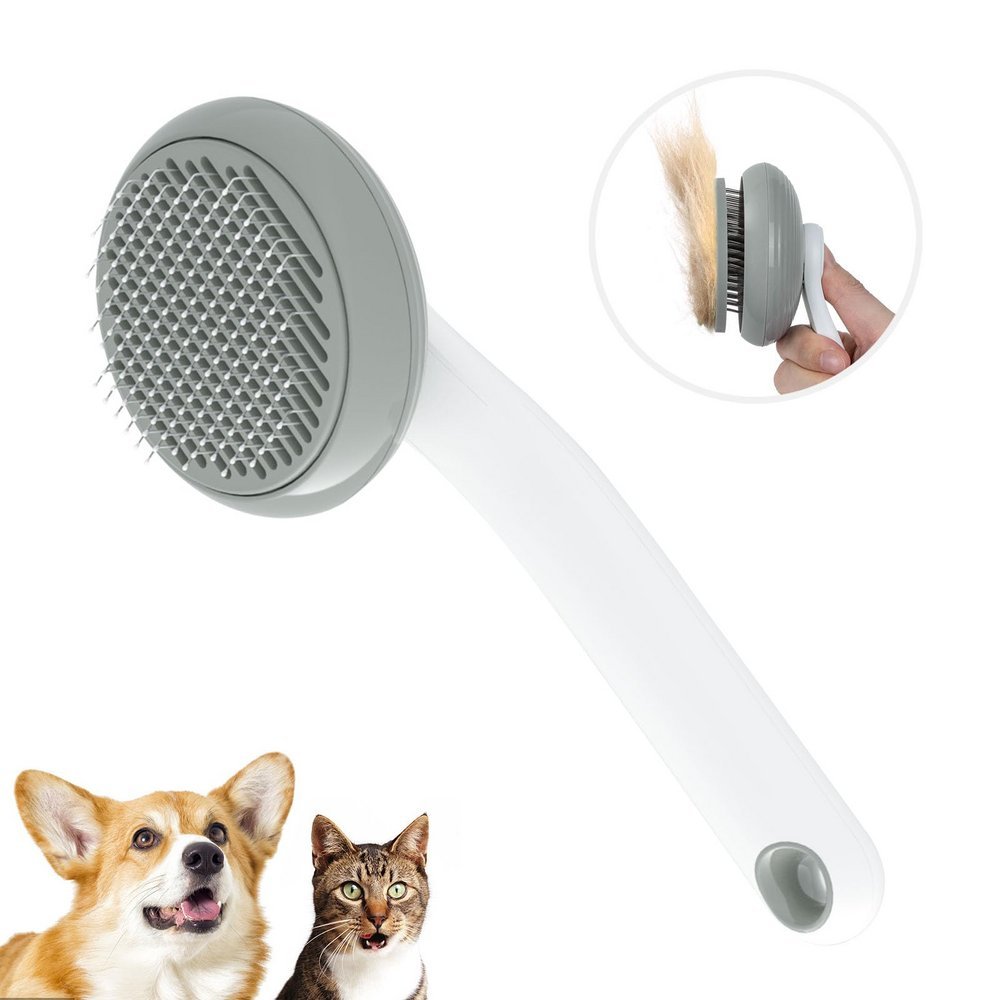
Brush, click, and the whole sheet of loose fur pops off the bristles. The one grooming tool owners describe as weirdly satisfying.
Our verdict: The click-to-clean mechanism sounds like a gimmick until your first shedding season. Then it becomes the brush you reach for.
Every long-haired pet owner knows the ritual: brush the pet, then spend as long cleaning the brush. The self-cleaning design fixes the second half — a button pushes a plate forward (or retracts the pins) and the collected fur lifts off in one sheet. It sounds trivial; in shedding season it is the difference between grooming weekly and not bothering.
What to look for: stainless pins with rounded tips, a mechanism that still clicks crisply in demo videos, and an ergonomic handle — you’ll hold it at odd angles around haunches and tails. Brush in the direction of growth, in short sessions, and stop before your pet’s patience does.
What we liked
- One click retracts the pins and releases the fur mat — no picking hair out of bristles
- Fine bent pins reach the undercoat where loose fur actually lives
- Regular use genuinely reduces fur on furniture — it’s removal at the source
- Most pets tolerate it well when sessions stay short and gentle
What to watch out for
- It is not a dematting tool — work mats out with fingers or a comb first, or you’ll pull skin
- Pressing hard scratches skin; the pins do the work with almost no pressure
- Cheap versions have pins that bend or retract unevenly within weeks
- Short-haired pets with no undercoat gain little — a rubber brush suits them better
Who it is for — and who should skip it
Best for: medium- and long-haired cats and dogs, double coats, shedding season. Skip it if: your pet’s coat is very short, or the coat is already matted — see a groomer first.